
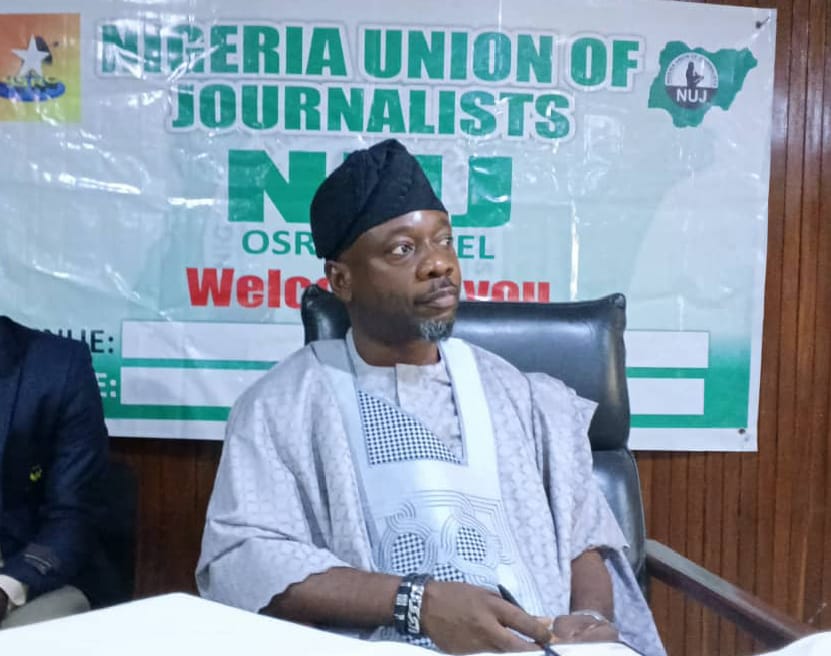
An aspirant for the Ondo North Senatorial seat on the platform of the All Progressives Congress (APC), Alex Ajipe, has described the direct primary system as the most credible method for political parties to select their candidates.
Ajipe stated this Akure on Tuesday while featuring on “Circuit” an interractive personalities programme of Ondo State Radiovision Corporation (OSRC/Orange FM) NUJ Chapel.
Speaking on the topic, “Scaling the Hurdles of Bad Governance through Qualitative Representation,” the APC chieftain argued that, when properly conducted, direct primaries allow all party members to participate in choosing their leaders in a transparent and inclusive manner.

He added that the process is not only credible but also cost-effective, as it reduces the financial burden often associated with delegate-based systems.
According to him, the ideal primary election should involve party members openly queueing behind their preferred candidates, with votes counted manually and results recorded transparently.
“If direct primaries are done the way they are supposed to be done, then I think it will be the best way to elect representatives and other party officers,” Ajipe said,

He expressed optimism that credible processes would ultimately produce the most popular candidates.
The aspirant also criticised what he described as a prevailing political culture in Ondo State, where federal appointees and legislators allegedly form alliances to oppose sitting governors in pursuit of personal ambitions.

He called for greater unity among political actors, urging appointees—particularly at the federal level-to work collaboratively with the state government to deliver democratic dividends.
Citing the political trajectory of Ondo State Governor, Lucky Aiyedatiwa, Ajipe noted that leadership positions are ultimately determined by providence, stressing the need for restraint and cooperation among stakeholders.

On legislative structure, Ajipe rejected calls for a part-time National Assembly, insisting that Nigeria’s complex governance challenges require full-time lawmakers.
He urged citizens to evaluate legislators based on the quality of representation they provide.
In her remarks, Chairman of the Nigeria Union of Journalists (NUJ), OSRC/Orange FM Chapel, Odunayo Sawyerr, identified corruption and weak accountability as major drivers of bad governance in Nigeria.
She said qualitative representation-anchored on competence, empathy, and accountability—remains critical to overcoming governance challenges.
Sawyerr referenced the legacy of Obafemi Awolowo, noting that his leadership in the old Western Region delivered landmark achievements such as free education and improved healthcare, setting a benchmark for effective governance.
Also speaking, the Director-General of OSRC Media Group, Kenneth Odusola Stevenson, and the Director of News and Current Affairs, Taiwo Ibitoye, described the discussion as timely.
They emphasised the role of the media in promoting transparency, holding leaders accountable, and exposing wrongdoing as essential elements in fostering qualitative representation and good governance.
