
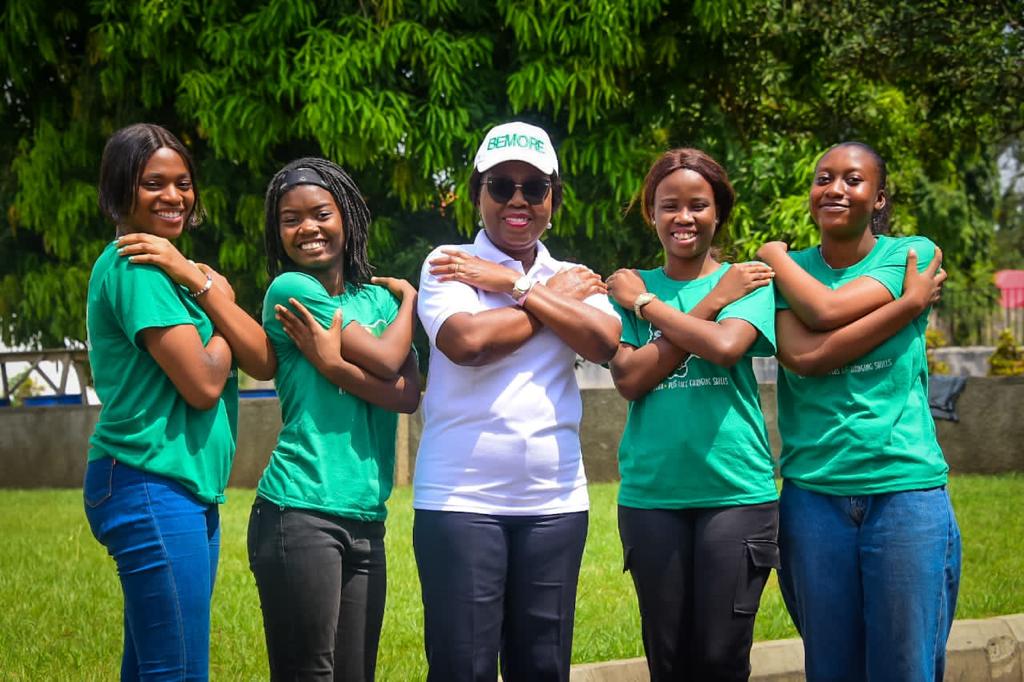
From a 16-year-old learning solar installation to a certified engineer winning multimillion-naira contracts, the BEMORE story is becoming one of Nigeria’s most remarkable girl-child empowerment journeys.
At 16, Christianah Madu walked into the BEMORE Summer Bootcamp as a teenager with dreams but few of the tools she needed to turn them into reality.
Three weeks later, she walked out with a skill that would eventually change the direction of her life: she had learnt how to install solar systems.
Years later, Christianah became a certified engineer and a business owner.
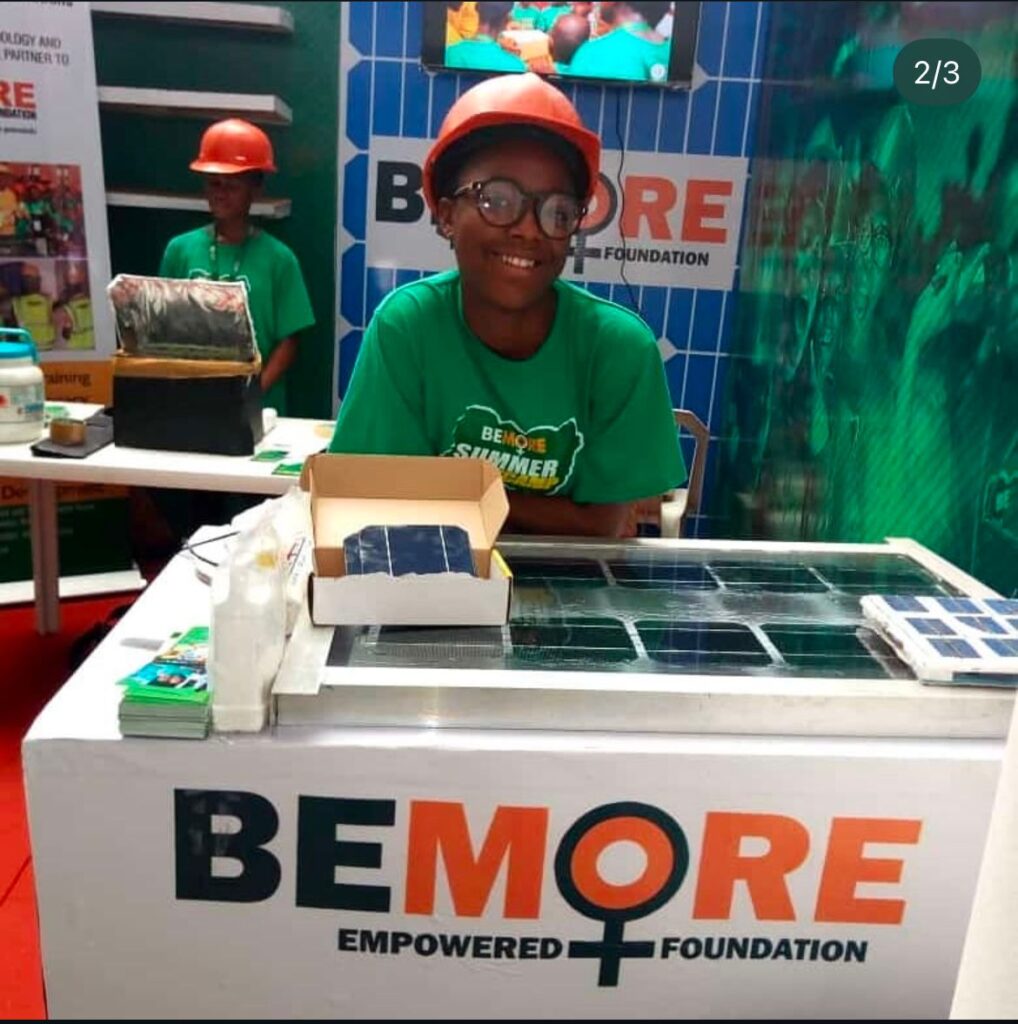
At 21, while studying Computer Engineering, she had already secured a N4 million contract to install solar home systems.
Looking back, she describes the impact of BEMORE in simple terms.
“I felt happy making my own money. It gave me financial freedom to help myself and my family,” she said.
But Christianah’s story is bigger than one girl.
It is about what becomes possible when a girl is given access to skills, technology and opportunity.
And that is why Dr. Betty Anyanwu-Akeredolu refused to give up on thousands of Nigerian girls.
What if girls were given the same exposure to technology and opportunities often reserved for boys?
What if a girl from a disadvantaged background could learn coding, solar technology and entrepreneurship before leaving secondary school?
And what if empowerment meant more than receiving a gift – what if it meant acquiring a skill that could eventually put money in her pocket?
Those questions gave birth to the BEMORE Empowered Girls Initiative in 2017.
Nearly a decade later, the answers can be found in the lives of the girls who passed through the programme.
By 2023, Dr. Anyanwu-Akeredolu said more than 3,000 girls had been trained through BEMORE. Another contemporary report put the figure at about 3,500, reflecting the programme’s expanding reach.
The girls came largely from rural and economically and educationally disadvantaged backgrounds. They were exposed to ICT, technology, solar installation, entrepreneurship and creative skills.
And BEMORE did not stop there.
In 2025, Ashdam Solar, the initiative’s long-standing solar training partner, said its collaboration with BEMORE had impacted more than 3,000 secondary-school girls over eight years.
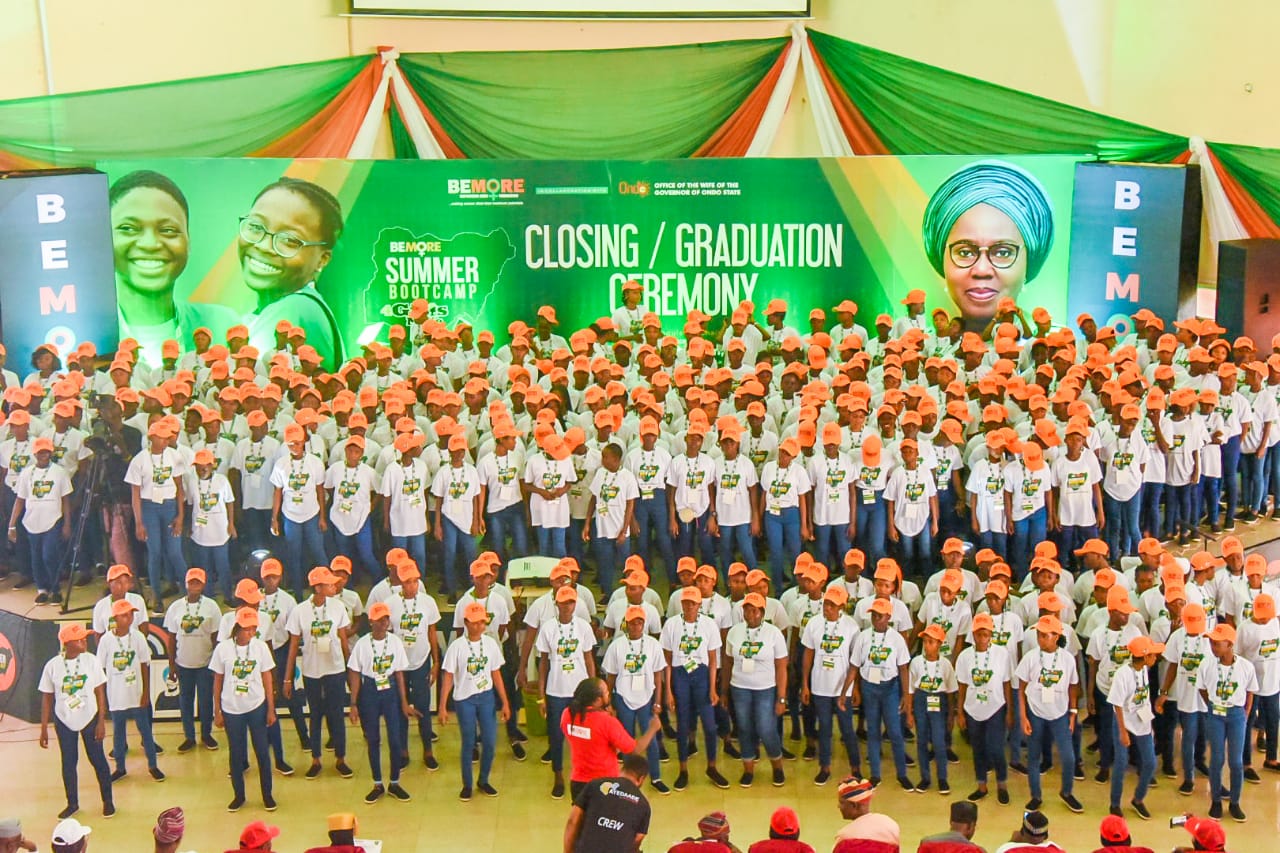
In 2026, the summer bootcamp moved to Oyo State, where another generation of girls was exposed to digital technology, renewable energy, vocational skills, leadership, financial literacy, health education, sports, music and personal development.
Three thousand.
Three thousand five hundred.
The numbers are impressive.
But numbers alone do not tell the BEMORE story. The real story begins after the girls leave the camp.
It is Christianah becoming an engineer.
It is the girl who discovered coding and stopped seeing technology as a man’s territory.
It is the beneficiary who became a CEO.
It is the alumna who returned to teach another girl.
It is the young woman who discovered that her hands could create value – and income.
And it is the girl who realised she did not have to wait for somebody to employ her.
She could become an employer.
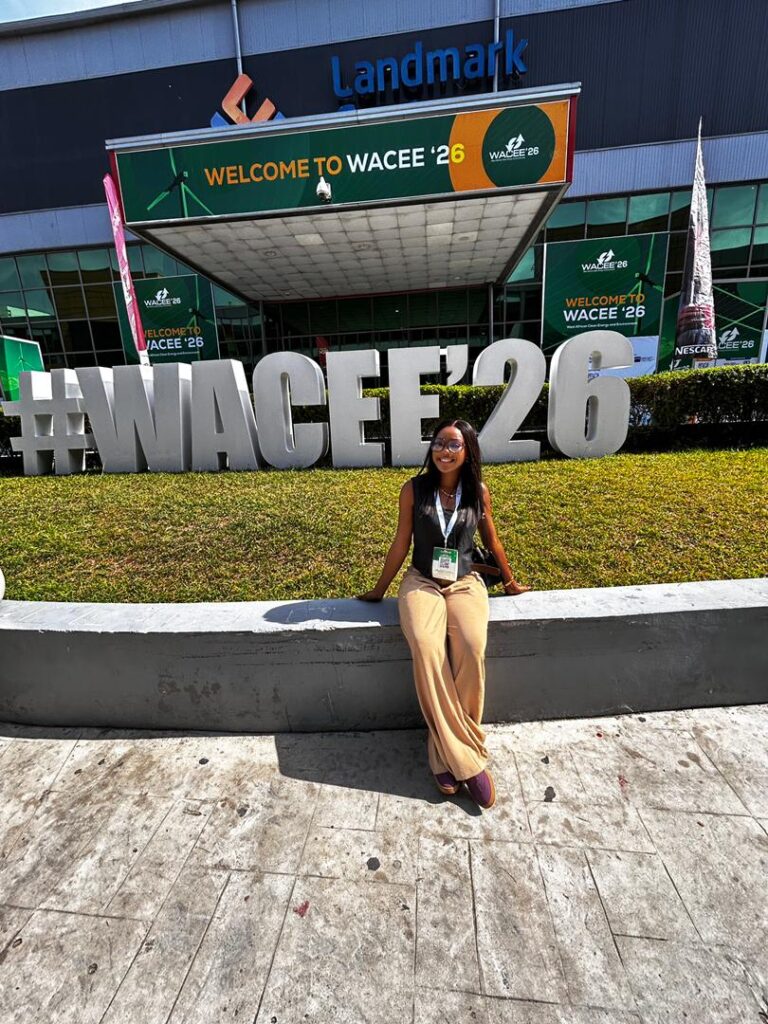
At the 2026 BEMORE bootcamp in Ibadan, former beneficiaries returned to share their journeys with the new generation.
One of them, Marvellous, has gone on to become a CEO. She told the younger girls how BEMORE broadened her outlook, equipped her with practical skills and gave her the confidence to establish her own business.
Another alumna, Bimbo, is now studying Law. She spoke about the importance of making the most of every opportunity. Despite the demands of her academic programme, she used her time at BEMORE to learn coding and other technical skills.
Then there is Paradise Nwaozuzu, whose story highlights another important part of the BEMORE experience: talent discovery.
A BEMORE alumna, Paradise composed and produced a birthday song for Dr. Anyanwu-Akeredolu. The song later became part of the musical score accompanying the bootcamp’s activities.
These stories show that BEMORE is not trying to produce one particular kind of woman.
It is helping girls discover who they can become.
Engineers, Lawyers, Entrepreneurs, Technology enthusiasts, Creative artists, CEOs and Future leaders.
Perhaps nowhere is BEMORE’s practical impact more visible than in its solar-energy programme.
In 2018, 400 girls who participated in the bootcamp received laptops, while some were trained in solar-energy development and entrepreneurship.
By 2021, the solar component had gone even further.
About 400 homes had been powered through BEMORE girls, while another 300 rural women received solar facilities in the first phase of a wider intervention targeting 1,000 homes.
Think about what that means.
A teenage girl attends a summer camp. She learns how solar technology works. She returns home. And suddenly, her family has access to electricity because of something she learnt.
That is the difference between empowerment as charity and empowerment as capacity.
And perhaps the clearest sign that BEMORE has grown beyond a conventional empowerment programme is the emergence of its alumni community.
The BEMORE Sisters Network, formed by former beneficiaries, has gone on to organise initiatives including free ICT training for other girls.
Five alumnae were behind the formation of the network in 2022. That development matters!
Because the real test of empowerment is not whether beneficiaries continue to receive. It is whether they eventually begin to give. The BEMORE girls are beginning to do exactly that.
They are returning, they are teaching, they are mentoring, they are creating, they are leading.
The circle is complete.
When Dr. Betty Anyanwu-Akeredolu started BEMORE in 2017, she was confronting a problem that has persisted for decades, the gender gap in Science, Technology, Engineering, Mathematics and entrepreneurship.
Her approach was deliberately practical.
Do not simply tell girls they can compete with boys. Give them the tools to compete. Do not tell them to become entrepreneurs. Teach them skills they can monetise. Do not lecture them about technology. Put technology in their hands. Do not just tell them to dream. And create an environment where those dreams can become tangible.
That philosophy has become the DNA of BEMORE.
Its training has covered ICT, solar technology, entrepreneurship, creative arts and other practical skills aimed at building critical thinking, confidence, creativity and self-reliance.
But there is another chapter of the BEMORE story that deserves attention.
Dr. Betty Anyanwu-Akeredolu left office as First Lady of Ondo State.
BEMORE did not leave with her. She continued!
That may be one of the strongest indications of the initiative’s staying power.
Across Nigeria, many programmes associated with political office fade away when the person who initiated them leaves government.
BEMORE has taken a different path!
It has continued as a foundation. The bootcamp has continued. Its alumnae remain active. Its partnerships have continued. And new girls continue to come through its doors.
In 2024, for instance, Dr. Anyanwu-Akeredolu empowered 70 girls in Ibadan with laptops and home solar systems through the BEMORE Empowered Girls Foundation.
In 2026, the initiative is still training girls outside Ondo State, showing that the vision had moved beyond the geographical and political boundaries of the office where it began.
That is why BEMORE should not be seen simply as a former First Lady’s project.
It has become a legacy in motion.
You can see that legacy in Christianah, Marvellous, Bimbo, Paradise among others.
You can as well see it in the BEMORE Sisters returning to train younger girls.
And you can see it in thousands of girls who now know how to code, install solar systems, create businesses and use technology and who, perhaps most importantly, have learnt that their gender should never determine the size of their ambition.
That is why Dr. Betty Anyanwu-Akeredolu deserves commendation.
Not simply because she started BEMORE. But because she refused to abandon it when the office that gave it visibility was gone.
She continued to invest her time, energy and resources in the next generation. She continued to stand behind the girls. And the girls are answering that investment with results.
History may remember Dr. Betty Anyanwu-Akeredolu as the wife of a former governor and the First Lady of Ondo State.
But the girls of BEMORE may remember her differently.
They may remember her as the woman who looked at a teenage girl and saw an engineer.
The woman who looked at a rural girl and saw an entrepreneur. The woman who looked at a girl without access to technology and put a laptop in her hands. The woman who looked at communities living in darkness and taught their daughters how to harness sunlight.
And, above all, the woman who told thousands of Nigerian girls:
You can BEMORE.
Then she gave them the tools to prove it.
That may ultimately be her most enduring legacy.
Omo’ba Kunle Ariyo is a Journalist. He writes from Isinkan
