
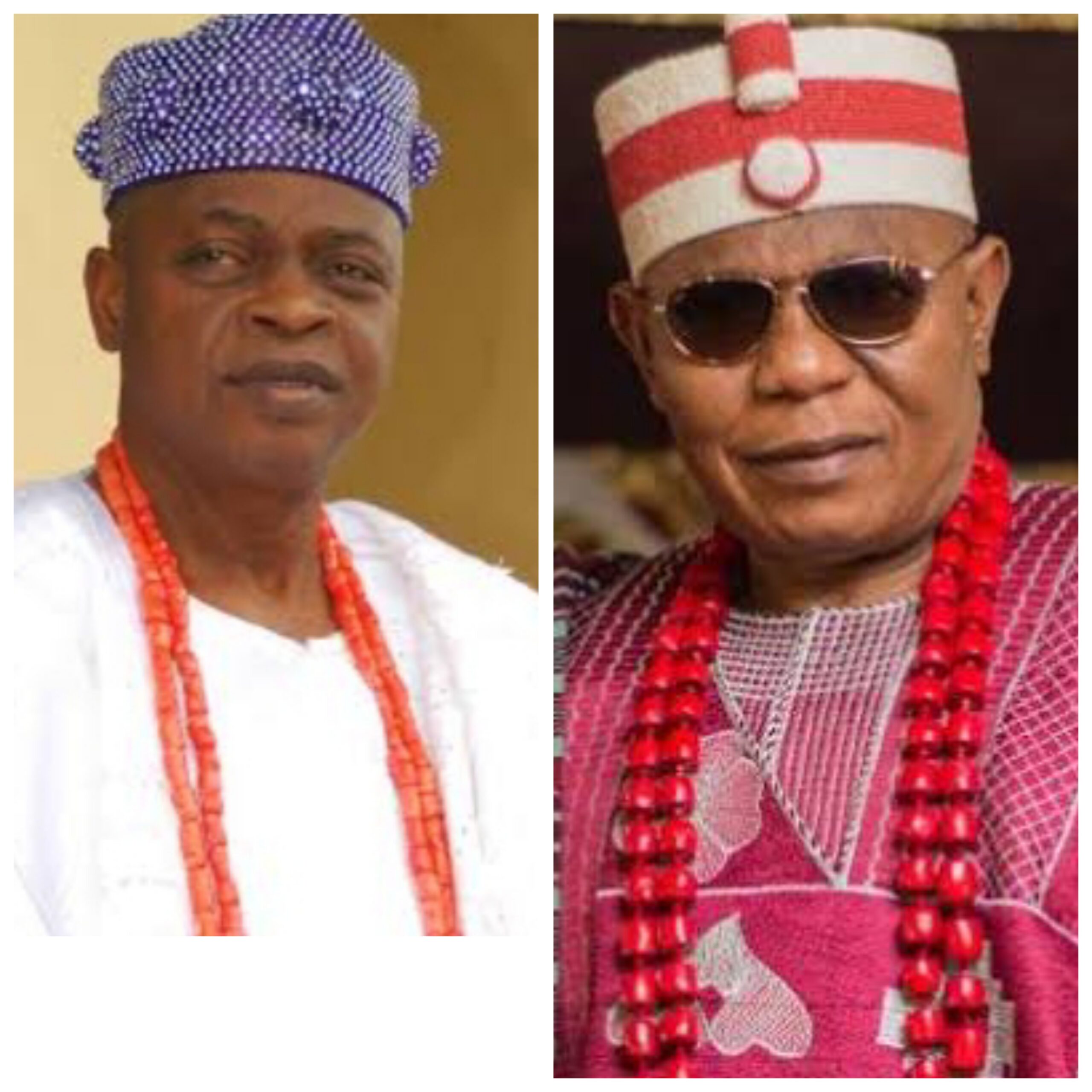
The Olowa of Igbara-Oke, His Royal Majesty, Oba Dr. Francis Adefarakanmi Agbede (Ogidi III, OFR), has declared that no community can claim historical seniority over Igbara-Oke, insisting that the ancient kingdom has its own distinct ancestral identity, traditional status and historical heritage traceable to Ile-Ife.
The declaration comes against the backdrop of a historical claim by the Deji of Akure, Oba Aladetoyinbo, that Igbara-Oke is an offshoot of Akure, a position that the Olowa and cultural representatives from Ile-Ife have challenged by reaffirming Igbara-Oke’s independent historical identity and ancestral connection to Ile-Ife.
The monarch made the declaration during a two-in-one historical and cultural event hosted at his palace on Saturday, November 7, 2026, where a cultural envoy from Ile-Ife also reaffirmed Igbara-Oke’s ancestral connection to the cradle of Yoruba civilisation.
The gathering, hosted by the Olowa, who is also the Director-General of the Southwest Nigeria Council of Traditional Rulers, attracted revered traditional rulers, cultural custodians from Ile-Ife, distinguished chiefs, eminent sons and daughters of Yoruba land, members of the press and other invited guests.
Speaking with journalists, Oba Agbede described the occasion as an important opportunity to correct historical misconceptions, establish facts about Igbara-Oke’s origin and ensure that its history is properly documented for generations yet unborn.
He maintained that Igbara-Oke was an ancient kingdom with a recognised traditional identity and could not be placed beneath another community on the basis of claims unsupported by historical evidence.
The Olowa pointed to an official Federal Government gazette in which Igbara-Oke was listed as number 37 among recognised traditional institutions, noting that the document predated the birth of his father.
According to him, the historical record further reinforces the kingdom’s longstanding traditional status and the need for its heritage to receive the recognition it deserves.
A major highlight of the event was the historical account presented by Dr. Adegbola Adelegan, Special Assistant on History and Culture to the House of Oduduwa, Ile-Ife, who traced the founding of Igbara-Oke to the second Ooni of Ife.
Dr. Adelegan emphasised the central position of Ile-Ife in Yoruba history, describing it as the ancestral source from which several Yoruba communities and kingdoms emerged.
He argued that the House of Oduduwa encompasses traditional rulers across Yorubaland, stressing that every Oba who wears a crown has a place in the broader heritage of Oduduwa.
The cultural envoy was emphatic that Igbara-Oke had never been under the authority of another Oba and had never had a Baale, describing any historical narrative suggesting otherwise as inaccurate.
He further explained that Igbara-Oke and Igbara-Odo shared a common ancestry, identifying Arajaka Olowa as their father, with Igbara-Oke being the elder of the two communities.
Addressing historical relationships among neighbouring kingdoms, Dr. Adelegan cautioned against attempts to distort the origins and traditional standing of communities.
He maintained that although Akure and Igbara-Oke were both Yoruba settlements, they had different ancestral origins and that Igbara-Oke was not historically subordinate to another kingdom.
His position directly challenges the claim attributed to the Deji of Akure that Igbara-Oke originated as an offshoot of Akure, reinforcing the argument that the two kingdoms have distinct historical identities and that one cannot automatically claim ancestral or traditional superiority over the other.
He stressed that the age, traditional standing and historical identity of Yoruba kingdoms, particularly those whose origins date back to the 16th and 17th centuries, must be respected rather than subjected to competing claims of superiority.
The envoy called on traditional rulers and cultural stakeholders to prioritise historical truth, unity and proper documentation, warning that failure to preserve authentic accounts could leave future generations with distorted versions of their heritage.
He also acknowledged the contributions of the Ooni of Ife, Oba Adeyeye Enitan Ogunwusi, to the preservation and documentation of Yoruba history, noting that the monarch had consistently encouraged historical research and consulted him on books and publications relating to Yoruba kingship.
Dr. Adelegan also offered an explanation of the historical significance of the name Igbara-Oke, linking it to the traditional use of an igi ayigbara, a medicinal tree associated with the treatment of an ailment.
