
By: Seun Ologunagba
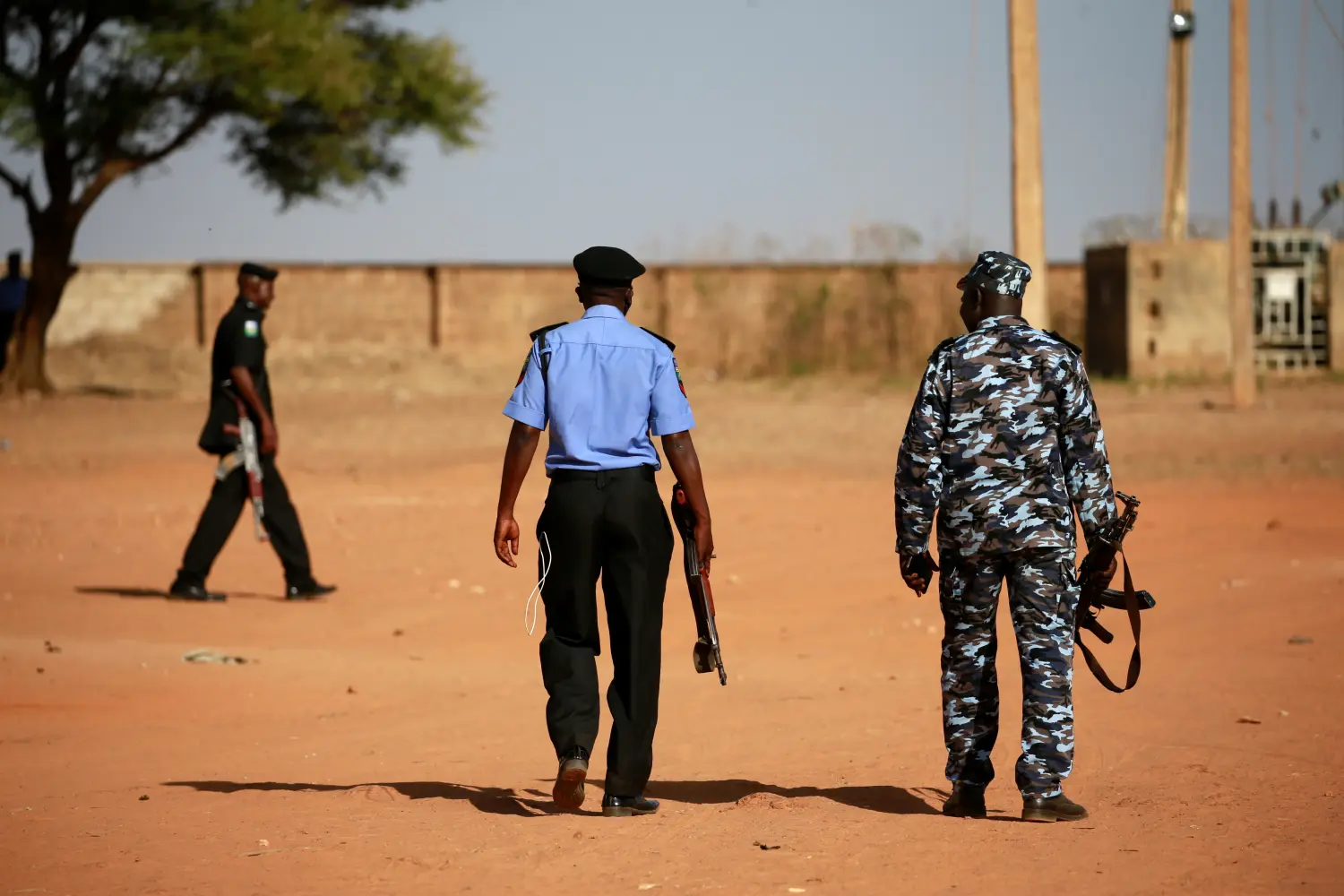
Nigeria’s deepening security crisis is taking a dangerous new turn, with violent attacks spreading southward toward the country’s commercial nerve centre, Lagos, and threatening areas that have largely been insulated from decades of insurgency and banditry.
The gruesome killing of more than 160 people in a central Nigerian village last week underscores what security analysts describe as a fundamental shift in both the geography and character of violence across Africa’s most populous nation.
The massacre came amid mounting concerns that extremist groups and armed gangs are expanding beyond their traditional strongholds.
President Bola Tinubu has declared a security emergency as the attacks intensify.
Meanwhile, the United States has increased its military engagement in the region, reflecting growing international concern about the trajectory of Nigeria’s security landscape.
For years, Nigeria’s insecurity followed a largely regional pattern — jihadist insurgency in the northeast, banditry in the northwest, separatist unrest in the southeast and communal clashes in parts of the Middle Belt.
Now, analysts warn, those threats are converging in the central region, historically considered a buffer zone, but increasingly vulnerable.
“This multi-front security environment is stretching the military and security agencies thin,” said Fola Aina, a political scientist at SOAS, University of London.
“The result is a reactive security posture rather than a preventive one. Armed groups are exploiting mobility, local networks and governance gaps faster than the state can respond.”
Particular concern surrounds the growing activity in and around Kainji National Park, a vast conservation area that stretches toward Niger Republic and the Republic of Benin.
Once primarily a wildlife sanctuary, the park has reportedly become a strategic haven for armed groups operating across borders.
According to research by the Clingendael Institute, security incidents in and around Kainji surged dramatically, rising from just nine recorded events four years ago to 151 in 2024.
Analysts say the park’s difficult terrain and limited state presence make it an attractive operational base for extremist and criminal networks.
The evolving threat also has regional implications. Benin, a key trade corridor linking Nigeria to West Africa, is increasingly exposed. Kars de Bruijne, a researcher at the Clingendael Institute, warned that Benin risks becoming a third conflict pole connecting violence in the Lake Chad Basin — where Boko Haram and allied factions operate — with the long-running insurgencies in Mali, Niger and Burkina Faso.
The Lake Chad conflict, driven largely by Boko Haram and splinter jihadist factions, has persisted for over a decade, exploiting ungoverned spaces and fragile borders.
Security experts fear similar patterns are now emerging in Nigeria’s central belt and along its western frontier.
The creeping violence is edging closer to Lagos and neighbouring southwestern states, which account for a significant share of Nigeria’s economic output.
Earlier this year, suspected bandits linked to illicit mining activities killed five park rangers in Oyo State, a development that heightened anxiety in the region.
“If insecurity continues to move southward into Nigeria’s economic heartlands, the implications will be significant for national stability and growth,” Aina warned.
With extremist groups capitalising on porous borders, weak governance and overstretched security forces, observers say Nigeria faces a defining moment.
Whether the country can reverse the southward drift of violence may determine not only its internal stability but also the broader security architecture of West Africa.
