

A Professor of Industrial Chemistry at Adekunle Ajasin University, Akungba-Akoko (AAUA), Ondo State, Prof. Adeleke Ashogbon, has identified modified starches as effective tools in the treatment and control of cardiovascular diseases, diabetes, obesity and other health conditions.
Prof. Ashogbon explained that resistant starches in modified forms are structurally altered in a way that makes them indigestible by enzymes in the small intestine. According to him, they are later broken down in the large intestine into short-chain fatty acids, which play a vital role in reducing the risk of cardiovascular disorders, cancer, obesity and diabetes.

The professor made this known on Tuesday, December 16, 2025, while delivering the 52nd inaugural lecture of the university, titled “From Root to Revolution: The Chemistry and Innovation of Modified Starches.”
He advised the public to consume starchy foods in cold or cooled form, noting that hot starchy foods contain lower amounts of beneficial resistant starch. He added that once starchy foods are cooled, they retain most of the retrograded resistant starch even when reheated.

Highlighting the dietary and industrial importance of starch, Prof. Ashogbon said modified starches are produced by altering the chemistry of native starches obtained from legumes, cereals, roots, tubers and unripe fruits. These modified forms, he noted, contain higher levels of resistant starch and improved functional properties suitable for food, pharmaceutical and industrial applications.
“Modified starches are natural starches—such as those from wheat and potato—that have been altered through physical, chemical or enzymatic processes to enhance properties like texture, viscosity, stability and resistance to heat or acid. This makes them valuable as food additives, including thickeners, stabilisers and emulsifiers, as well as in biomedical and industrial applications,” he said.
The chemist disclosed that although native starches are affordable, non-toxic and readily available, they lack certain functionalities and sufficient resistant starch content, making them unsuitable for direct application in many industries.

He stressed that modifying starches to increase their resistant starch content and functionality is essential for expanding their use across sectors.
On industrial applications, Prof. Ashogbon explained that single-modified starches are commonly used in the food industry for thickening, gelling, stabilisation, fat replacement and instant pre-gelatinised products.
He added that dual chemically modified starches serve as emulsifiers, binders and thickeners in food production, while also functioning as heavy metal absorbents in non-food industries.
According to him, quadruple modified starches are used in synthesising resistant starches that help prevent obesity, diabetes and cardiovascular diseases. They are also employed in the production of porous starches used as organic adsorbents for water purification and heavy metal removal.

In his remarks, the Vice-Chancellor and Chairman of the occasion, Prof. Olugbenga Ige, said the university’s inaugural lecture series provides a platform for scholars to present impactful research findings that contribute to societal development.
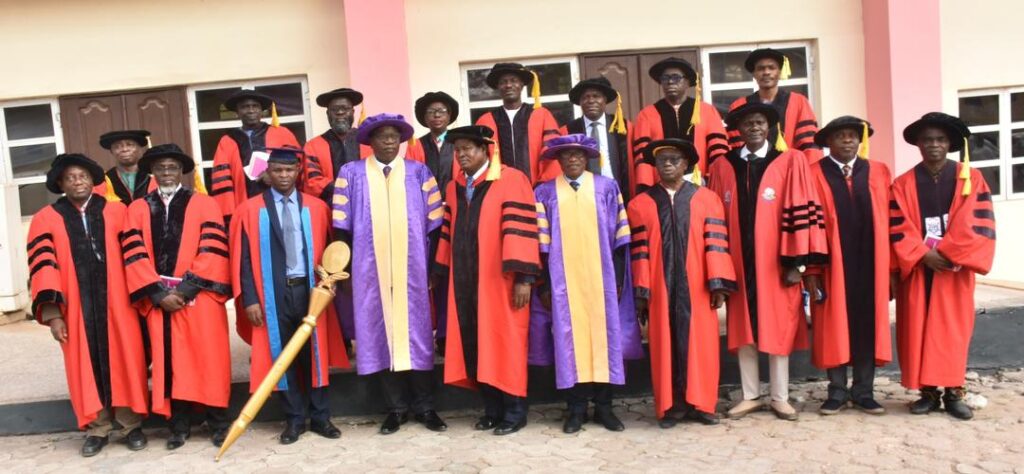
Prof. Ige commended Prof. Ashogbon for his dedication to innovative research and his significant contributions to the university’s academic growth and vision.
