
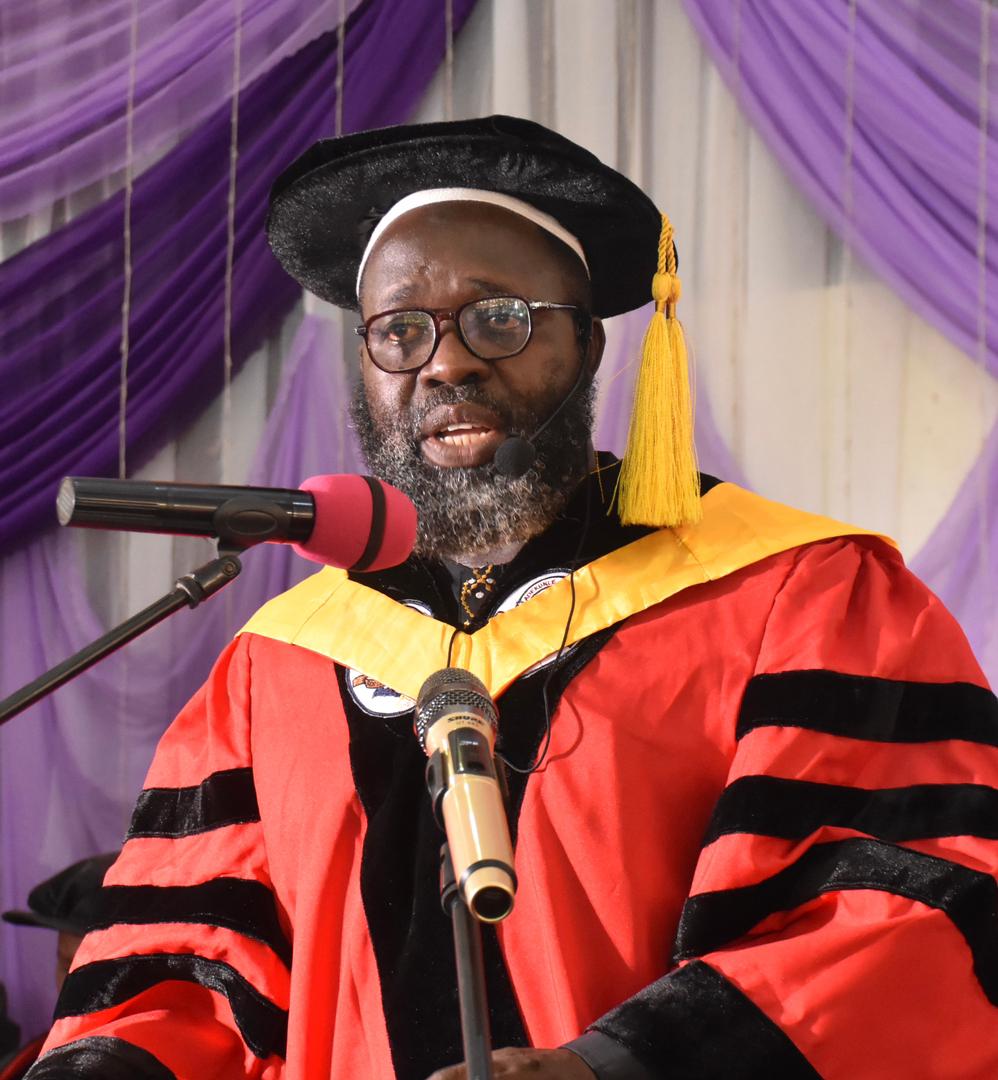
A university don, Professor Sunday Olatunji, has advocated the introduction of Artificial Intelligence (AI) as a compulsory course for all students in higher institutions across Nigeria, regardless of discipline. He also called on Nigeria and Africa to deliberately build an intelligent, inclusive, and technologically sovereign future that leverages artificial intelligence to elevate human potential.
Professor Olatunji, a Professor of Artificial Intelligence and Dean of the Faculty of Computing at Adekunle Ajasin University, Akungba-Akoko (AAUA), made the call on Tuesday, January 13, 2026, while delivering the 53rd Inaugural Lecture of the university at the Multipurpose Hall.
The lecture was titled “Symbiosis of Mind and Machine: Harnessing AI for National Development.”

According to him, achieving an AI-driven future for Nigeria and Africa requires deliberate actions, including institutionalising capacity building for AI excellence; developing functional policy and ethical frameworks for responsible AI; strengthening AI literacy and workforce development; and making AI a General Studies (GST) course in all higher institutions.
He also emphasised the need to promote no-code AI and machine learning pathways for beginners, foster public–private–academic partnerships, and build inclusive and culturally grounded AI systems.
Professor Olatunji, who was ranked by the National Universities Commission (NUC) as the Best AI Researcher in Nigeria for 2025, stressed that artificial intelligence is no longer science fiction but a reality permeating every aspect of modern life.
“Just as Computer Appreciation became a national requirement decades ago, the time has come for AI Appreciation as a compulsory General Studies course,” he said. “Such a course should expose all students, irrespective of discipline, to AI fundamentals, machine learning concepts, applications of AI in their fields, ethical implications, and AI’s role in national development.”


The AI expert urged governments to establish AI innovation hubs in all tertiary institutions and research centres, promote cross-disciplinary collaboration, provide national research grants focused on AI solutions to local challenges, and recruit and train faculty specialised in AI, machine learning, data science, robotics, and computational intelligence.
Addressing fears that AI could replace humans or threaten humanity, Professor Olatunji dismissed such concerns, noting that technological revolutions throughout history have consistently redefined rather than diminished human relevance.

“Many fear that the rise of artificial intelligence signals the decline of human relevance,” he said. “But history teaches otherwise. From the printing press to electricity, from the internet to AI, technology has not diminished humanity but redefined it. AI’s true power lies not in replacing human intelligence but in amplifying it.”
He added that AI in governance and the workplace is about augmenting institutional intelligence, reducing corruption through transparency, improving welfare delivery through predictive targeting, and enhancing policy design through data-driven insights.
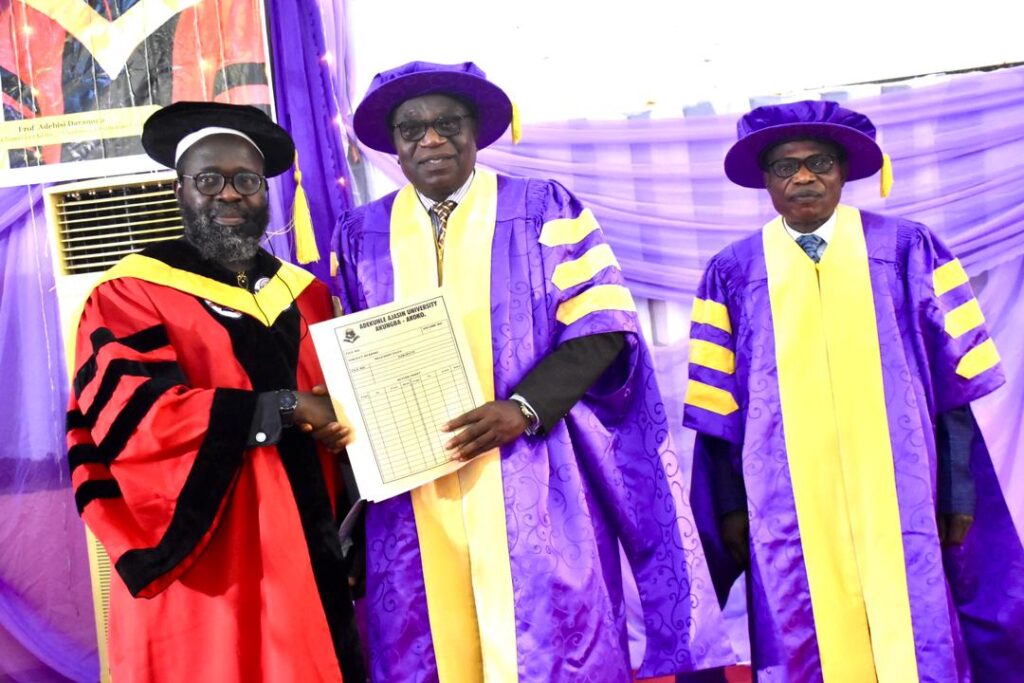
“The true measure of progress is not how much work we transfer to machines, but how much meaning we preserve in what remains uniquely human—judgement, ethics, empathy, creativity, and purpose,” he said.
Professor Olatunji further called for the development of a comprehensive national AI policy and strategy, the establishment of national and institutional AI ethics committees, and policies that ensure accountability, transparency, data protection, and fairness, while aligning with global best practices and African values.

He also stressed the importance of developing AI systems in Nigeria’s local languages to promote national identity and equitable development. According to him, AI deployment must prioritise rural empowerment, digital inclusion, prevention of algorithmic bias, and protection of minority groups, while respecting cultural values, social norms, and indigenous knowledge systems.
The multi-award-winning researcher, who has taught and conducted research in Saudi Arabia, Malaysia, and Nigeria, emphasised the need to strengthen collaboration among universities, industry, government, ICT agencies, and international bodies. He advocated industry-funded AI research aligned with national priorities, support for AI start-ups and incubators, and clear commercialisation pathways for academic research.
“To position Nigeria and Africa as global contributors rather than perpetual consumers, we must develop indigenous AI technologies tailored to local datasets and realities. This includes establishing national data repositories, open-source platforms, and sovereign cloud infrastructure, as well as incentivising patents, start-ups, and intellectual property from African innovators.” He said

Earlier, while introducing the lecturer, the Vice Chancellor of Adekunle Ajasin University, Professor Olugbenga Ige, described Professor Olatunji as a widely acclaimed researcher whose impact resonates globally.
He praised him for his numerous awards, his pioneering role in establishing the Faculty of Computing at AAUA, and his outstanding service as its founding Dean.
Professor Ige noted that Professor Olatunji has carved an enviable niche for himself in the digital and artificial intelligence space and remains one of the institution’s most distinguished scholars.
