
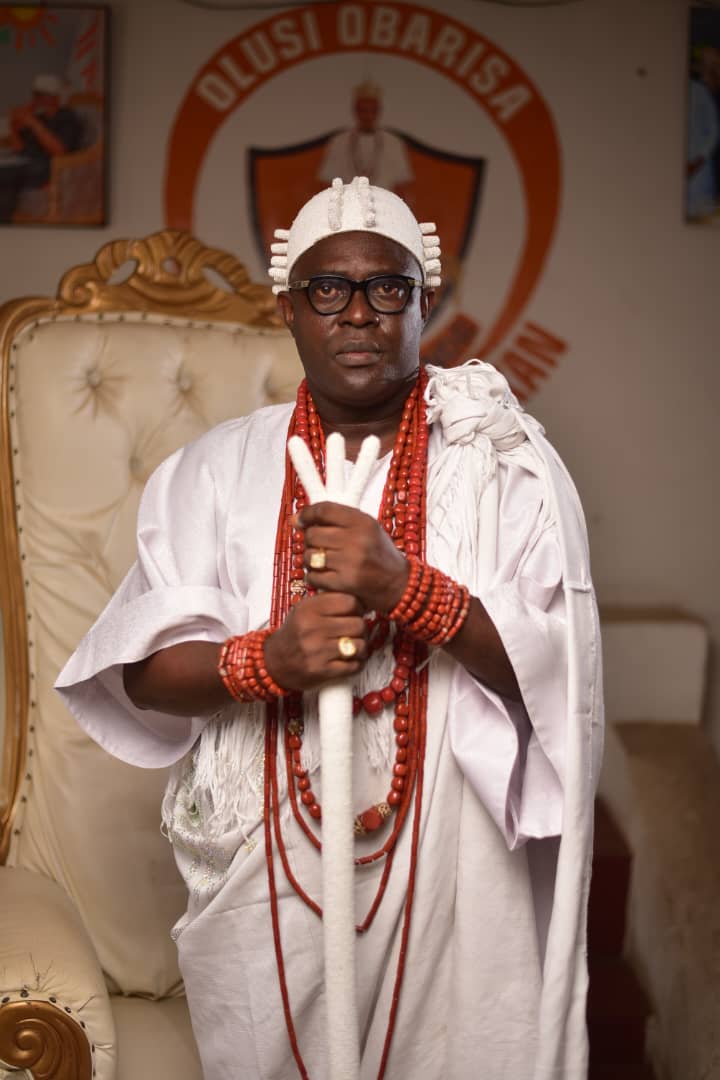
***Monarch Unveils Five-point Development Agenda, Urges Sons and Daughters at Home, Diaspora to Invest in Ancestral Homeland
The Iralepo of Isinkan Kingdom in Akure South Local Government, Ondo State, Oba Oluwagbemiga Olofin-Adimula Arulewolasi III, has called on sons and daughters of the ancient community, both at home and in the diaspora, to close ranks and channel their collective resources towards the development of the kingdom.
The monarch’s passionate appeal is apparently coming in the aftermath of the October 12, 2026 judgment of the Ondo State High Court, Akure Judicial Division, which dismissed a suit instituted by the Deji of Akure, Oba Aladetoyinbo Aladelusi, challenging the recognition of the Iralepo chieftaincy and upheld the territorial claims of Isinkan.
In the judgment delivered by Justice Sunday Olorundahunsi in Suit No. AK/434/2022, the court affirmed the statutory authority of the Ondo State Executive Council to elevate a minor chieftaincy to a recognised chieftaincy under Part I of the state’s Chiefs Law without obtaining the consent of another traditional ruler.
The court specifically held that the applicable provisions of the Chiefs Law did not confer on the Deji of Akure the authority to consent to or veto the recognition of the Iralepo of Isinkan.
Justice Olorundahunsi also upheld the Ondo State Government’s authority to constitute the Justice C.E.T. Ajama Commission of Inquiry on Chieftaincy Matters, whose recommendations informed the government’s recognition of the Iralepo stool.
In a significant pronouncement on the territorial dispute, the court declared the Iralepo the “undoubted head of his own people” and affirmed his territorial claim over the stretch of land extending from Imogun to the Aponmu/Owena River.
The court further ruled that any purported sale or alienation of any part of Isinkan land by the claimant was vitiated.
It consequently granted a perpetual injunction restraining the Deji, the other defendants and persons acting through them from undertaking or permitting any action inconsistent with the rights and privileges of the recognised Iralepo chieftaincy.
Another perpetual injunction restrained the Deji, his agents, assigns and privies from further alienating any part of the land extending towards Aponmu/Owena River along Ondo Road and across the boundaries belonging to the Iralepo and his people.
The court dismissed the Deji’s claims in their entirety and upheld the counterclaim of the Iralepo.
Against this background, Oba Olofin-Adimula, in his message to the people of Isinkan, expressed gratitude to God for what he described as the stabilisation of the Iralepo throne and the clarification of the kingdom’s territorial boundaries.
He said the kingdom had weathered several storms, battles and challenges, but divine intervention and the collective commitment of its people had brought it to a new phase of peace and stability.
According to the monarch, the achievements were not the accomplishment of an individual but the collective victory of the entire Isinkan community.
He commended the people for their love, prayers, financial contributions and unwavering support, while also appreciating friends and well-wishers who stood by the kingdom during its difficult moments.
“The struggle was collective, the achievement is for us all, and the benefits will be for all of us and upcoming generations,” he said.
The monarch, however, stressed that the kingdom must now move beyond its historical struggles and concentrate on building a prosperous future for its people.
Describing the present moment as an opportunity for a new beginning, he unveiled a five-point development agenda focusing on cultural preservation, unity and peace, community development, youth empowerment and economic growth.
On cultural preservation, the Iralepo emphasised the need to protect Isinkan’s language, customs, traditions and indigenous institutions, while ensuring that younger generations are adequately exposed to the history and heritage of their forebears.
He said preserving the kingdom’s cultural identity was essential to sustaining its historical values and passing its legacy to generations yet unborn.
On unity and peace, Oba Olofin-Adimula called for peaceful coexistence, constructive engagement and amicable resolution of disputes among families, compounds, indigenes and residents.
He maintained that no community could achieve meaningful progress in an atmosphere of division and urged all stakeholders to embrace reconciliation and collective responsibility.
The monarch also identified infrastructure development as critical to improving the living conditions of the people, calling for sustained efforts to secure better roads, reliable electricity, clean water and improved healthcare facilities.
He said the kingdom must strengthen its engagement with government, development institutions and private investors to attract development projects, stimulate economic activities and improve the standard of living.
On youth empowerment, the Iralepo described young people as active partners in the development process, rather than merely leaders of tomorrow.
He advocated greater investment in education, scholarships, vocational training, entrepreneurship, technology and innovation to equip youths with the skills and opportunities required to contribute meaningfully to the kingdom’s growth.
The monarch further called for the exploration of Isinkan’s economic potential in agriculture, commerce, tourism and cultural enterprise.
He particularly appealed to Isinkan indigenes in the diaspora to bring their expertise, professional networks, investment opportunities and resources home to support development initiatives.
Oba Olofin-Adimula assured the people that the palace would remain accessible and committed to accountability, promising to encourage open communication, stakeholder participation and responsible stewardship in the administration of the kingdom.
He emphasised that the development agenda was not the responsibility of the palace alone, but a collective assignment requiring the active participation of traditional chiefs, Olus, community associations, women, youths, professionals, entrepreneurs and other stakeholders.
The monarch called on elders to provide guidance and wisdom, youths to contribute their energy and creativity, women to sustain their support and prayers, and indigenes abroad to deploy their knowledge and resources towards the advancement of their ancestral home.
He also stressed the importance of investing in human capital, noting that the future of Isinkan would depend largely on the education of its children, empowerment of its youths, support for women and recognition of its elderly citizens.
“Isinkan is our heritage. Isinkan is our pride. Isinkan is our home. No one else will develop it for us if we do not develop it ourselves,” the monarch declared.
He appealed for unity, love and collective responsibility, expressing optimism that a better and more prosperous Isinkan was achievable if all stakeholders worked together.
He urged all sons and daughters of Isinkan to unite behind a common vision and ensure that the progress being pursued today creates lasting opportunities for generations to come.
