
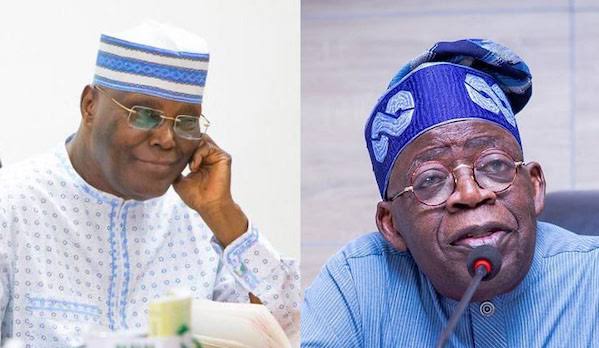
Former Vice-President and African Democratic Congress (ADC) presidential candidate, Atiku Abubakar, has urged President Bola Tinubu to take urgent steps to reduce the price of petrol and ease the growing cost-of-living burden on Nigerians.
Atiku made the call on Friday while addressing journalists at his residence in Abuja on fuel prices, palliatives and the rising cost of living.
He said Nigerians had endured the consequences of the removal of petrol subsidy since May 2023, arguing that the impact had spread from transportation to food prices, farming, manufacturing and household expenses.
According to him, the rising cost of petrol has increased transportation costs, which in turn has pushed up the prices of goods and services.
“When government makes energy expensive, it makes life expensive,” Atiku said, stressing that the ultimate burden of rising energy and transportation costs was being transferred to Nigerian families.
He said the success of economic reforms should not be measured only by increased government revenues, allocations or Gross Domestic Product, but by the purchasing power of ordinary Nigerians.
“Economic growth must enter the home. It must enter the market basket. It must show up in the purchasing power of the worker,” he said.
The ADC candidate also criticised reliance on palliatives, arguing that temporary relief measures could not substitute for policies capable of addressing the underlying causes of rising living costs.
He said food distribution and cash transfers could provide temporary assistance but would not permanently resolve the challenges facing families whose incomes were being eroded by rising food, transportation and energy costs.
Atiku also challenged Tinubu over his earlier criticism of calls for government intervention on petrol prices, saying workers, manufacturers, petroleum marketers and ordinary Nigerians had all raised concerns over the impact of rising energy costs.
He urged the President to reconsider his position and implement measures that would bring down the cost of petrol, regardless of who initially proposed them.
Atiku said Tinubu should use what he described as the remaining eight months of his administration to provide relief to Nigerians.
He said the President should not reject a policy proposal because it came from a political opponent, adding that he would be willing to provide his policy framework to the administration if it would help reduce the economic burden on Nigerians.
“A sensible idea does not become a bad idea because it came from your opponent,” Atiku said.
He further warned against the planned phase-out of electricity subsidies, saying Nigerians and businesses were already struggling with high electricity costs.
Atiku said small businesses and manufacturers depend heavily on electricity and alternative sources of energy to operate, warning that withdrawing electricity support without adequate measures to cushion the impact could further increase production costs.
He urged the government not to repeat what he described as the experience of petrol subsidy removal.
“Do not remove first and think later. Do not impose the pain first and search for palliatives afterwards,” he said.
The former Vice-President also restated his proposal for a targeted production subsidy for petroleum products refined in Nigeria if elected president in 2027.
Under the proposal, he said, only petroleum products confirmed to have been refined domestically would qualify for the intervention, while imported products would be excluded.
He said the programme would operate within a fixed spending limit, subject to National Assembly approval and independent audits.
Atiku said the objective was to reduce domestic production costs, strengthen local refining, improve purchasing power and ease pressure on households and businesses.
He argued that economic policy should ultimately be measured by whether ordinary Nigerians could afford basic necessities.
The ADC presidential candidate has in recent weeks repeatedly called for interventions to reduce petrol prices and ease the wider economic pressures associated with rising transportation, food and energy costs.
